CONSISTENCY AND THE CAPACITY TO CHANGE
CONSISTENCY AND THE CAPACITY TO CHANGE
“When you’re finished changing, you’re finished.” —Unknown
CHARLES CURTMAN – Dec 07, 2025
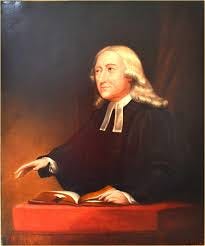
A critic accused John Wesley of contradicting himself in his writings. Wesley answered as follows:
“If all my sentiments were compared together, from the year 1725 to 1768, there would be truth in the charge; for during the latter part of that period, I have relinquished several of my former sentiments. During these last thirty years, I have varied in some of my sentiments without observing it … I believe there will be found few, if any, real contradictions in what I have published for near thirty years.”
C.R. Curtman – FYI is a reader-supported publication. To receive new posts and support my work, consider becoming a free or paid subscriber.
Wesley admitted that his perception of and positions on certain things had changed from what they had been 43 years earlier. But, he pointed out that having come to different conclusions about these things, he had remained consistent in those areas about which he had simply and properly changed his mind.
It should be expected, and is commendable, of men—especially preachers—that they would change their minds about some things as they grow older. The ability and willingness of men to adjust their perspective and opinions in keeping with the greater understanding and clarity they may arrive at is a mark of intelligence and maturity. More significantly, it is a characteristic of those whose humility and honesty will not allow them to think “more highly” of themselves and their opinions, etc. than they “ought to think” (Rom. 12:33).
On August 3rd, 1650 Oliver Cromwell wrote the following to the general assembly of the Church of Scotland: “I beseech you brethren, in the bowels of Christ, think it possible you may be mistaken.” Some men, foolishly and to their own detriment and shame, give the impression that they think it is impossible that they might be mistaken.
It is silly and self-defeating for a man to not want to improve himself in any way he can. Abraham Lincoln said, “I don’t think much of a man who is not wiser today than he was yesterday.” Lack of growth and change are characteristics of things that are sick, dead or artificial.
It is unbecoming of preachers especially, to be prideful, dogmatic, diehards who are too insecure to consider it possible that they might be mistaken about anything. This is a characteristic of a “novice, lifted up with pride,” and liable to “fall into the condemnation of the devil,” who is disqualified from the ministry (1 Tim. 3:6). See also, Matt. 5:1-3.
Apollos is described as a preacher who was “an eloquent man, and mighty in the Scripture.” But probably his greatest attribute was the humility with which he was willing to receive correction from people like Aquila and Priscilla and and make changes in his life that would work to the glory of God and to the good of others (Acts 18:24-26). Apollos set a good example for preaches today. Apollos set a good example for preachers and others to follow today.
C.R. Curtman – FYI is a reader-supported publication. To receive new posts and support my work, consider becoming a free or paid subscriber.
Recent Comments